
Site Loader
A developer working on a custom financial software interface, showcasing creativity and innovation in fintech solutions.
Main

Personalized Solutions in Financial Software Engineering

Imagine a financial institution seeking to launch a new investment platform. Off-the-shelf solutions fall short, unable to address unique compliance requirements or deliver the seamless experience clients expect. In these cases, partnering with a financial software development company becomes essential for building custom platforms that set firms apart in a competitive market.

Why Custom SaaS Platforms Matter in Finance

Developing a custom Software-as-a-Service (SaaS) platform offers financial organizations flexibility that packaged products rarely provide. Requirements in the financial industry evolve quickly, and regulatory demands can differ by region and product type. With a tailored approach, a company can integrate secure third-party APIs, automate complex reporting, and build scalable infrastructure for future growth. A financial software development company can design solutions that adapt as regulations change, ensuring your platform remains compliant and reliable while delivering the user experience customers demand.

UI/UX Design for Fintech: The Value of User-Centered Thinking

User experience is not just about attractive interfaces. In fintech, well-executed UI/UX design leads to higher engagement, fewer errors, and increased trust in digital products. For example, intuitive dashboards for wealth management apps can help clients visualize portfolio performance at a glance, while clear workflows in payment systems minimize transaction mistakes. Design teams can conduct usability studies to identify friction points, then implement features like biometric login or customizable alerts to enhance both security and satisfaction. By focusing on the end user’s real needs, a team can create financial tools that are not only secure but genuinely easy to use.

Leveraging Blockchain for Security and Transparency

Blockchain development in financial software isn’t reserved for cryptocurrencies. Distributed ledger technology can bring security, traceability, and efficiency to areas like cross-border payments, asset tokenization, and transaction settlement. For instance, integrating blockchain can provide auditable records for compliance checks or automate contract enforcement via smart contracts. The right development partner will evaluate where blockchain fits your business model and implement solutions that enhance transparency without sacrificing performance or usability.

Integrating Artificial Intelligence into Financial Apps

AI development is transforming financial services, from fraud detection to personalized investment advice. Machine learning models can analyze transaction patterns in real time to flag suspicious activity, reducing manual review workloads. In customer-facing apps, AI-driven chatbots can provide 24/7 support, answering common questions and guiding users through complex processes. Advanced AI analytics can also help identify new market opportunities by analyzing large volumes of financial data quickly and accurately. These capabilities allow organizations to offer smarter, safer, and more responsive services to their clients.

Where to Learn More About Financial Software Customization

Organizations considering a custom solution should start by identifying core requirements, such as compliance, scalability, and user experience, and then seek a partner with proven expertise in building financial applications. For an in-depth look at development strategies, the next step is to access a specialized guide that explores successful fintech projects, common pitfalls, and best practices for integrating emerging technologies like blockchain and AI. This resource will help you make informed decisions as you plan your next software initiative.
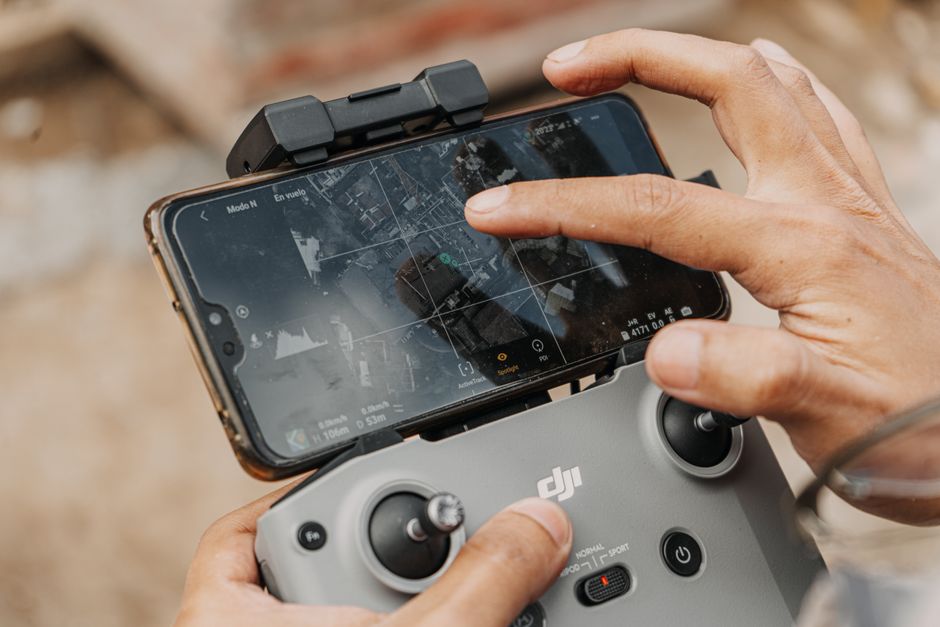

Aerial view of a drone capturing precise mapping data over a construction site.
Main

Top Drone Models for Precise Mapping Missions

In recent years, the evolution of drone technology has revolutionized the field of aerial mapping and surveying. Precision mapping missions require drones equipped with advanced sensors, reliable GPS systems, and robust flight capabilities to capture accurate geospatial data. Whether used in agriculture, construction, or environmental monitoring, selecting the right drone can significantly impact the quality and efficiency of data collection. Among the many options available, certain models stand out as top drones for mapping due to their specialized features and performance.

Key Features for Mapping Drones

Before exploring specific models, it is essential to understand the critical features that define a drone’s suitability for precise mapping missions:

  • High-Resolution Cameras: Essential for capturing detailed imagery to create accurate orthomosaics and 3D models.
  • GPS and RTK/PPK Systems: Real-time kinematic (RTK) or post-processed kinematic (PPK) capabilities ensure centimeter-level positioning accuracy.
  • Flight Time and Range: Longer flight times and extended communication ranges allow for covering larger areas in a single mission.
  • Stability and Wind Resistance: Stable flight in various weather conditions is critical to maintain image clarity and consistency.
  • Payload Capacity: Ability to carry specialized sensors such as LiDAR, multispectral, or thermal cameras.

Leading Drone Models for Mapping Missions

The market is filled with numerous drones designed for commercial use, but a few models have become favorites among professionals for their reliability and precision.

  1. DJI Phantom 4 RTK – Known for its integrated RTK module, this drone provides centimeter-level accuracy without the need for ground control points. It features a 20MP camera and an excellent flight time of approximately 30 minutes.
  2. SenseFly eBee X – A fixed-wing UAV with multiple sensor compatibility options, including RGB, multispectral, and thermal cameras. Its extended flight duration of up to 90 minutes makes it ideal for large-scale mapping projects.
  3. Parrot Anafi USA – Lightweight and portable, this drone offers thermal imaging alongside a 32x zoom camera, making it versatile for both mapping and inspection tasks.
  4. Topcon Falcon 8+ – Specifically engineered for industrial applications, this octocopter delivers precise geospatial data with modular payloads tailored for surveying and inspection.

Role of Acecore Drone Manufacturer in Advanced UAV Solutions

Among industry leaders, Acecore drone manufacturer has gained recognition for producing highly specialized UAVs tailored for commercial drones and complex mapping missions. Their platforms emphasize modular design, allowing users to equip drones with a variety of sensors suitable for different applications, including drone inspection and drone utility inspection. Acecore’s innovative approach integrates cutting-edge flight control systems and advanced data processing capabilities, making their drones an excellent choice for professionals who require accuracy and reliability in demanding environments.

Applications Beyond Mapping: Surveillance and Security

While precise mapping remains a primary function, many of these drones also serve additional purposes. Surveillance drone operations benefit from high-resolution cameras and extended flight times, enabling effective monitoring over large areas. The distinction between UAV vs drone often comes down to usage context, but regardless of terminology, these platforms play vital roles in drone security and infrastructure protection. For example, in energy sector inspections, drones facilitate rapid and safe assessments of power lines and pipelines, reducing risks and improving maintenance workflows.

Choosing the Right Drone for Your Mapping Mission

When selecting a drone for precise mapping, consider the specific requirements of your project:

  • Area Size: Larger areas may benefit from fixed-wing drones with longer endurance.
  • Accuracy Needs: RTK/PPK enabled platforms offer superior geospatial accuracy.
  • Payload Requirements: Determine if you need multispectral, thermal, or LiDAR sensors.
  • Budget Constraints: Balance cost with features essential to your mission’s success.
  • Regulatory Compliance: Ensure your drone meets local aviation regulations for commercial drones.

Elevating Mapping Missions with Cutting-Edge Drone Technology

As drone technology continues to advance, the possibilities for precise mapping and inspection expand exponentially. Choosing from the top drones for mapping, including those developed by industry innovators like Acecore drone manufacturer, enables professionals to achieve unparalleled accuracy and efficiency. Whether your focus lies in environmental monitoring, infrastructure inspection, or security surveillance, leveraging the right UAV technology will transform your operations and deliver actionable insights with confidence.